

A damaged door, tired worktop or broken hinge doesn’t justify ripping out an otherwise serviceable kitchen. But there comes a point where repairing individual components simply extends the life of a kitchen that really needs replacing.
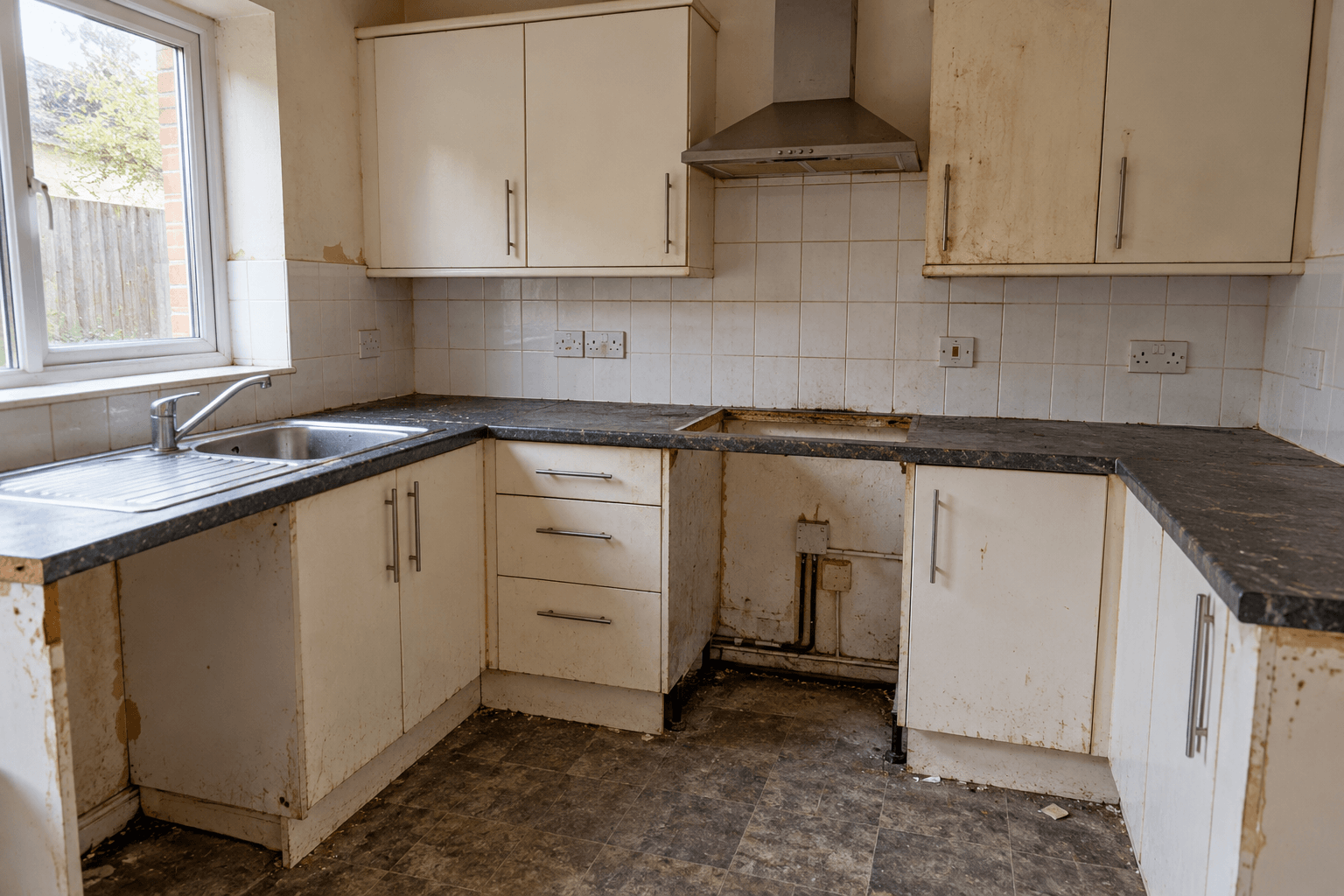
Getting that decision right matters. Repair unnecessarily and you can create repeat visits and ongoing maintenance costs. Replace unnecessarily and you increase material and labour costs.
So, what should you consider before deciding?
The visible problem isn’t necessarily the whole problem.
A damaged cabinet door might be an easy replacement. But several damaged doors combined with swollen cabinets, deteriorated worktops and failing hardware suggest a more fundamental problem.
Check the condition of:
If most of the kitchen remains sound, targeted repairs can make commercial sense. Once problems affect several different parts of the kitchen, however, the economics can quickly change.
This is one of the biggest practical problems with repairing older kitchens.
A replacement 500mm base unit might be easy enough to source, but matching the existing door style, colour, handles, worktop and cabinet finish can be much harder. Even supposedly similar finishes can look noticeably different when installed alongside units that have been in place for years.
For a landlord, housing provider or refurbishment contractor, a patchwork kitchen can also mean the same problem returns next time something needs replacing.
Sometimes starting again with readily available, standard components provides a much simpler long-term solution.
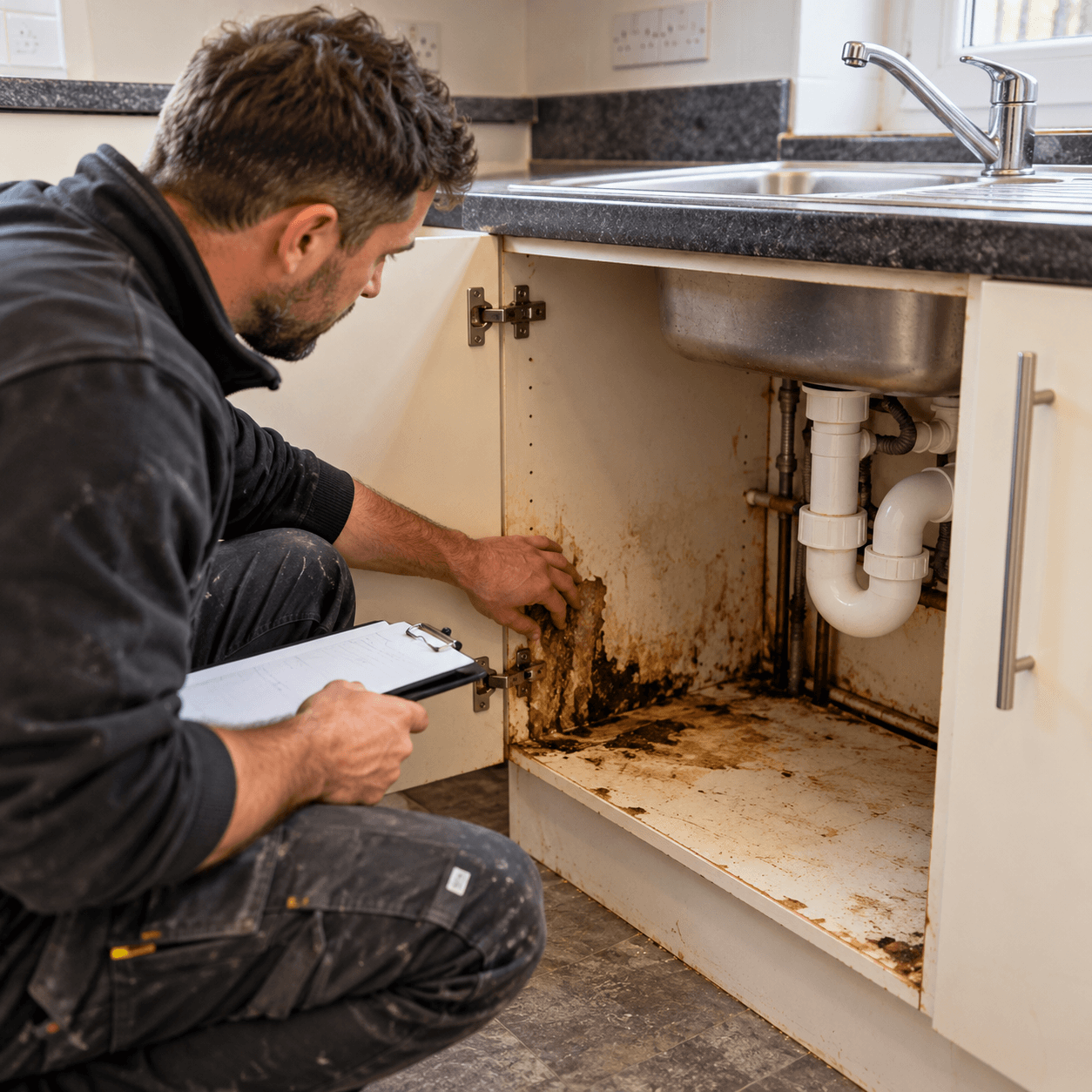
Kitchens inevitably contain several potential sources of water damage.
Sink units are particularly vulnerable, but leaks from taps, wastes, washing machines and pipework can affect neighbouring cabinets as well.
Once chipboard carcasses have absorbed significant moisture, swelling and deterioration can make an apparently simple repair much less worthwhile.
Before deciding to retain the existing kitchen, inspect areas around plumbing carefully. A cabinet that looks acceptable from the front may tell a very different story underneath or behind the unit.
Replacing two or three individual components sounds cheaper than replacing a kitchen. It isn’t always.
Finding matching parts, modifying replacements, making good around existing units and returning to complete outstanding work all consume labour.
For contractors carrying out voids or refurbishment programmes, time on site matters just as much as the price of the materials. If extensive repair work will consume almost as much labour as installing a straightforward replacement kitchen, full replacement may offer better overall value.
A full kitchen replacement introduces its own risks.
Don’t assume the existing layout can simply be reproduced. Check the room and identify anything that could complicate installation before ordering.
Pay particular attention to appliance spaces, plumbing positions, electrical points, boilers, boxed-in services, doors and windows.
And measure more than once…
Discovering that a required cabinet doesn’t fit after the old kitchen has been removed is an expensive way to lose time on a job.
Cabinets and worktops get most of the attention when specifying a kitchen, but incomplete orders are often caused by much smaller components.
Depending on the installation, you may also need plinths, end panels, handles, hinges, legs, worktop joining components, sink and waste fittings, sealants and appropriate fixings. Missing a relatively inexpensive item can stop an installation just as effectively as missing an entire cabinet.
A complete specification before work begins reduces additional supplier runs and helps keep the job moving.
For contractors managing multiple properties, there is another consideration: does every kitchen need to be specified from scratch?
A practical basic kitchen built around commonly used cabinet sizes can make repeat refurbishment work considerably easier.
Standardisation can help simplify:
There will always be properties that need something different, but establishing a repeatable specification for straightforward kitchens can remove unnecessary decisions from routine refurbishment work. This can be particularly useful for void properties, rental refurbishments and planned maintenance programmes where consistency and turnaround time matter.
There isn’t a universal rule. If the carcasses are sound and the damage is isolated, repairing the existing kitchen is often the sensible option.
If deterioration is widespread, components are difficult to match or the repair is becoming increasingly labour-intensive, full replacement deserves serious consideration.
The important thing is to assess the whole cost of the job; materials, labour, sourcing time and the likelihood of having to return to the same kitchen again.
For contractors carrying out kitchens regularly, a simple and repeatable specification can make that decision considerably easier.
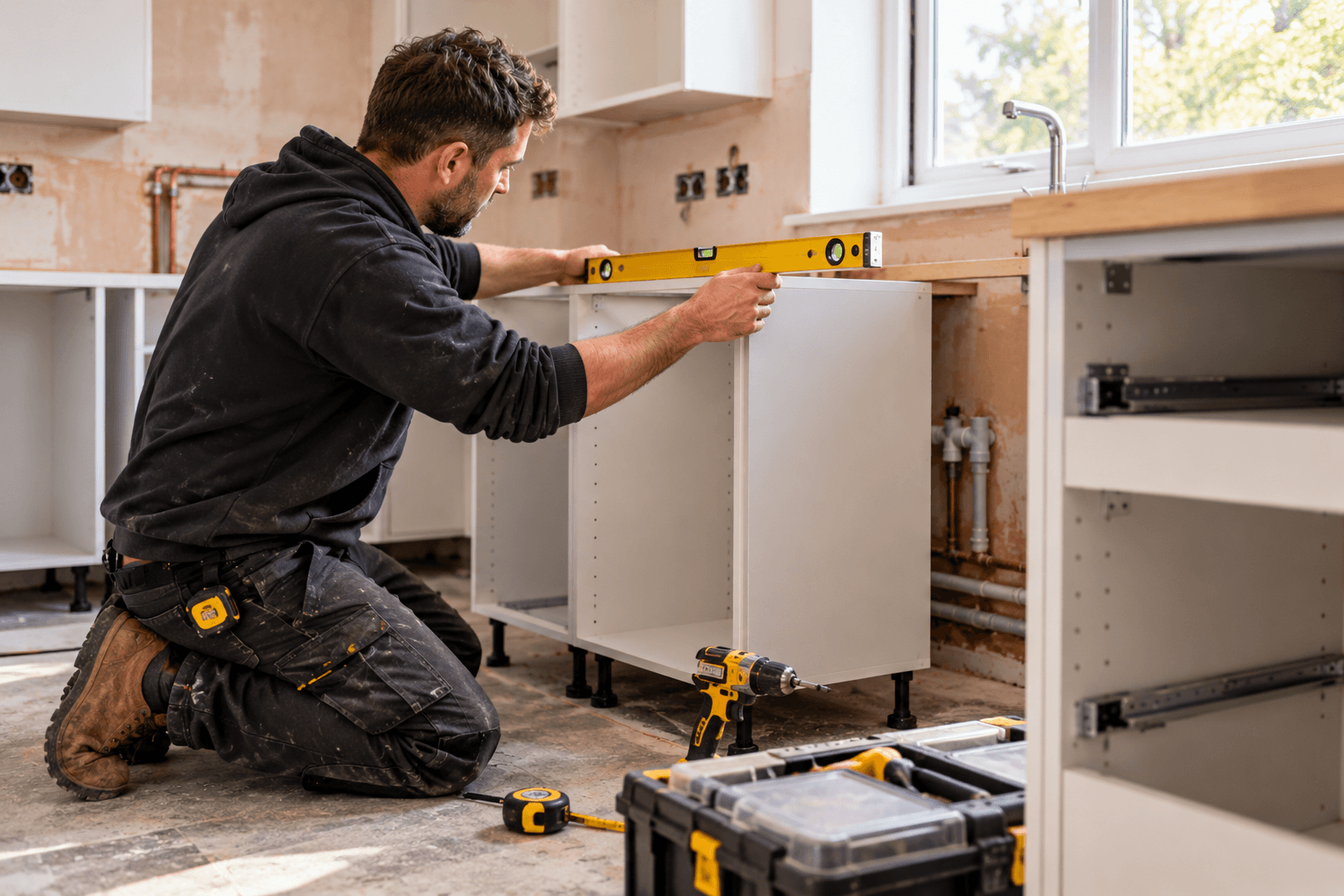
Whether you’re replacing a single damaged unit or fitting out a complete kitchen, getting the materials and specification sorted before work starts can save considerable time on site.
At Orion Trade Supplies, we stock a practical range of flat-pack kitchen units, worktops, sinks, taps and kitchen installation essentials for property maintenance and refurbishment work. Contractors can order online for UK-wide delivery, with Click & Collect and local delivery also available from our Rochester and Peckham branches.
If you’re regularly carrying out refurbishment work, you may also find our guides to materials standardisation and property maintenance procurement useful when looking for ways to simplify ordering across multiple jobs. Explore our kitchen range and property maintenance resources to help plan your next refurbishment.
