

Cleaning away visible mould may improve the appearance of a surface, but that is only part of the job. If the moisture causing the problem remains, there is a good chance the mould will return.

For property maintenance contractors, the key is knowing the difference between treating existing mould and dealing with the conditions that allowed it to develop in the first place.
Mould needs moisture to grow. In residential properties, that moisture can come from several sources, including:
Condensation is particularly common during the colder months. Warm, moisture-laden air comes into contact with colder surfaces such as windows, external walls and poorly ventilated areas, causing water to condense.
Bathrooms and kitchens are obvious problem areas, but mould can also appear behind furniture, around windows, in corners and other areas where air circulation is limited.
The important point for maintenance contractors is that visible mould is often the symptom rather than the underlying problem.
Mould and condensation are closely related, but they aren’t interchangeable. Condensation is moisture. Mould is biological growth that can develop where suitable damp conditions persist.
That distinction matters when assessing a job.
If condensation is regularly forming on a cold wall, simply cleaning mould from that wall doesn’t prevent more condensation forming the following day. Equally, mould caused by a leaking pipe won’t be permanently solved until the leak itself has been repaired.
Before treating mould, look for the likely source of moisture.
Once the cause has been considered, existing mould can be treated and the affected area cleaned.
The precise method will depend on the surface and products being used, but a typical maintenance job may involve:
Always follow the manufacturer’s instructions for the individual treatment and cleaning products being used, including any requirements for ventilation, PPE, application and drying times. Avoid simply painting or sealing over an active mould problem. Unless the mould and its underlying cause have been dealt with appropriately, covering the affected area may only hide the problem temporarily.
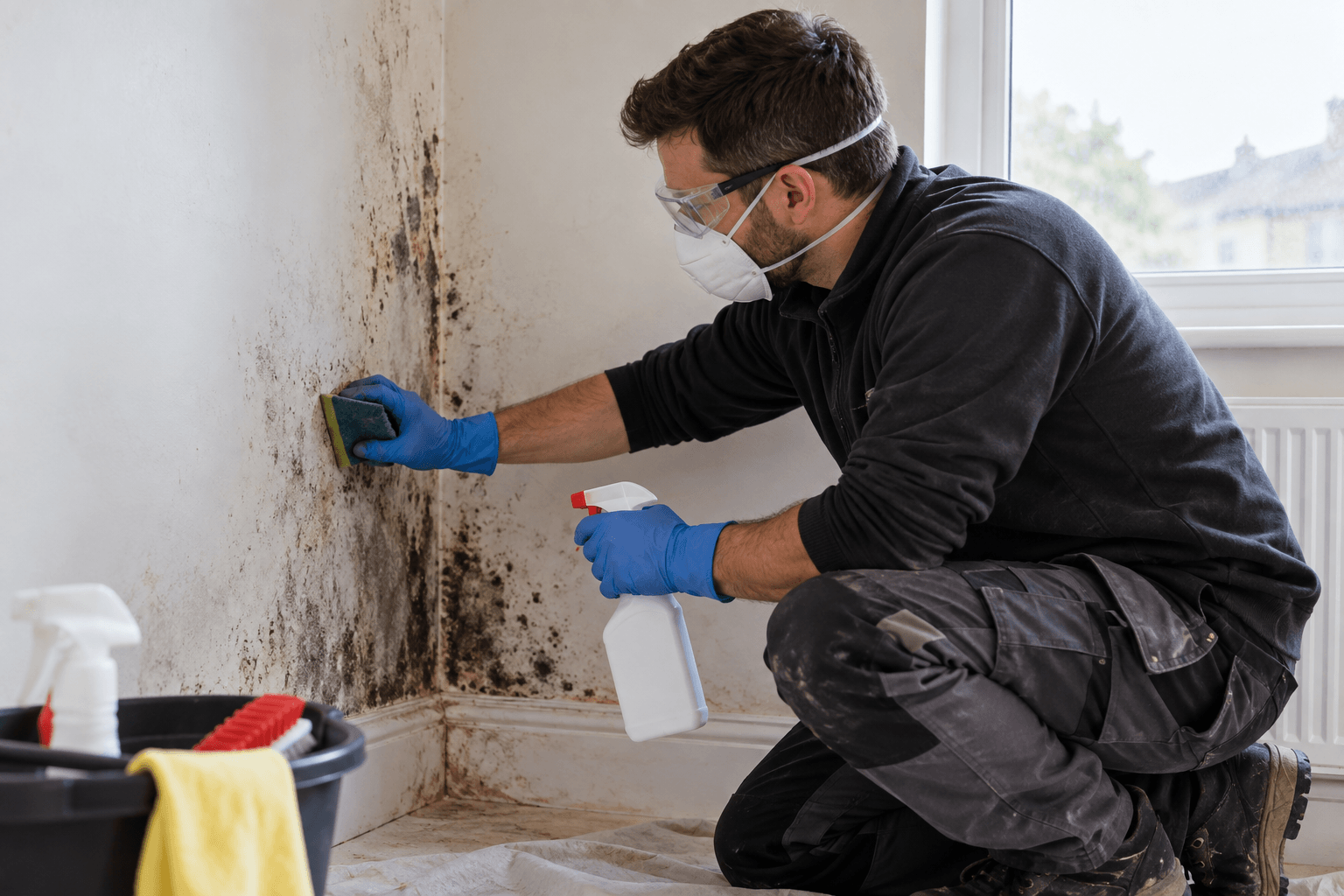
Treatment deals with the mould that’s already there. Prevention means addressing the conditions that allowed it to develop.
That starts with identifying where the moisture is coming from.
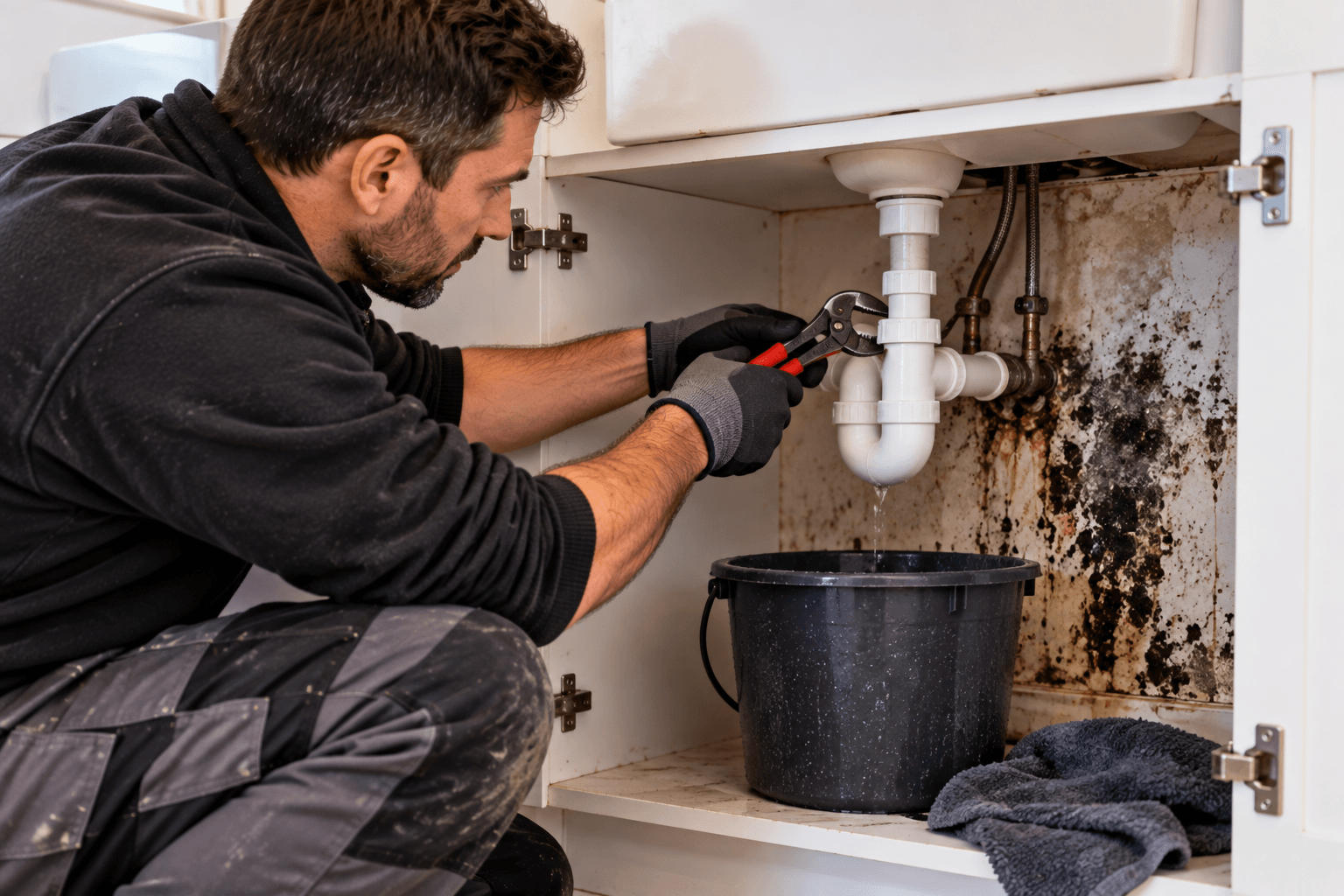
Inspect plumbing, seals and surrounding surfaces for obvious signs of leakage or water penetration. A small leak around a bath, shower, basin or pipework can keep an area damp enough for mould to develop repeatedly.
Where a maintenance issue is identified, repair it rather than relying on repeated mould treatment.
Bathrooms, kitchens and other moisture-producing areas need adequate ventilation. Where condensation is a recurring issue, check whether existing ventilation is working correctly and whether occupants are able to use it effectively.
Restricted airflow can also contribute to localised mould growth, particularly behind furniture and in corners.

The location of the mould can provide useful clues. Repeated mould around windows, cold external walls or corners may point towards persistent surface condensation, whereas a concentrated damp area around plumbing or sanitary fittings may indicate a leak.
Understanding the pattern can help determine what needs attention before the surface is treated.
Failed or damaged sealant around baths, showers, basins and worktops can allow water into areas that should remain dry.
Removing deteriorated sealant and replacing it correctly can therefore be an important part of preventing recurring moisture problems.
Repeatedly treating the same patch of mould isn’t a long-term maintenance strategy.
Further investigation may be needed when there is:
In these situations, the underlying defect needs to be identified and dealt with before cosmetic repairs are completed.
Routine mould treatment can require several different products and consumables, which means another list of materials to source before attending the job.
Our Property Maintenance Mould Treatment & Clean Up Kit brings together 16 practical items across 13 product lines for mould treatment, cleaning and general property maintenance work.
The bundle includes products for treatment, cleaning, tools and PPE, giving contractors a convenient starting point for tackling routine mould clean-up jobs without sourcing everything separately.
VIEW THE MOULD TREATMENT & CLEAN UP KIT
For contractors managing a range of maintenance jobs, it also forms part of our growing range of Property Maintenance Bundles, designed to keep commonly required materials together and simplify purchasing.
EXPLORE PROPERTY MAINTENANCE BUNDLES
When attending a mould-related maintenance job:
1. Assess the affected area
Establish how extensive the mould is and look for obvious sources of moisture.
2. Identify the likely cause
Consider condensation, leaks, failed seals, poor ventilation or water ingress.
3. Deal with maintenance defects
Repair leaks, failed seals or other identifiable defects rather than treating the visible mould alone.
4. Treat and clean the affected surface
Use appropriate products and PPE and follow the manufacturer’s instructions.
5. Allow the area to dry
Don’t rush into redecoration while surfaces remain damp.
6. Repair or redecorate where necessary
Assess whether affected materials can be repaired or need replacing.
7. Monitor recurring problems
If mould returns, further investigation of the underlying moisture source may be necessary.
Mould treatment has an important role in property maintenance, but removing visible mould is only half the job.
Where possible, identify why the area became damp in the first place. Fixing a leaking joint, replacing failed sealant, improving ventilation or addressing another source of persistent moisture can make the difference between a one-off maintenance job and repeated call-backs.
For property maintenance contractors, combining the right treatment materials with a methodical approach to identifying the cause provides a much better basis for dealing with mould effectively.
Shop Orion Trade Supplies online for UK delivery, use Click & Collect, or visit our trade counters in Rochester and Peckham.
